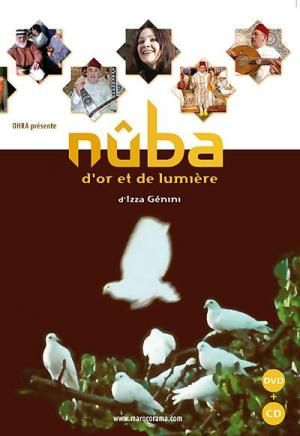
Nûba d'Or et de la Lumière plot
In this music film, Izza Génini investigates the history of the nûba. This Arab-Andalusian music has its origin fourteen centuries ago in Andalusia. She found her way to North Africa and became known in Morocco as El Ala. Through orchestral performances, music scholars, historians and a weaver from Fez, Génini takes us into the world of this age-old music. Originally there were 24 nûbas, composed according to the hours of the day. Eleven of these remain today, recovered from obscurity in the 18th century by El Haik from Tetouan. She edited it into a notebook, which became the bible for lovers of the nûba. Dawn, evening and night are the important elements in this form of music that inspired musicians and poets. The music form is scientific, and follows musical and poetic rules with great precision. Young and old play in the orchestras. The music is performed by voices, violins, lutes and 'rabab', and has a trance-like effect.