


Christopher Nolan is an expert at getting people talking about his movies, and the movie of his that arguably inspired the most debate is 2010's Inception.
The thriller tells the story of Dom Cobb, played by Leonardo DiCaprio. An 'extractor', he is an expert at extracting information from people's minds via their dreams, but he must pull off the opposite - planting an idea in someone's mind - in order to return home to his family after being accused of murdering his wife.
Throughout the movie, viewers must speculate as to whether what they are seeing is a dream sequence or in real life. At the conclusion of the movie, Cobb successfully reunites with his family, but the spinning top that he uses to determine a dream versus reality does not topple.
READ MORE: Oppenheimer initial reactions: 'A truly spectacular achievement'
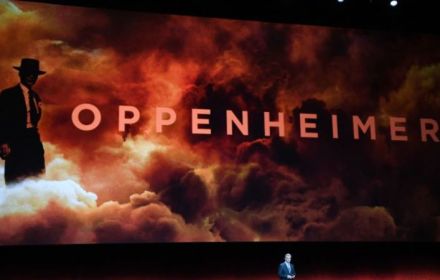
Nolan's next project is Oppenheimer, starring Cillian Murphy. It tells the story of the birth of the atomic bomb from The Manhattan Project. It is a true story, so there won't be a completely ambiguous ending like Inception, but there are comparisons to be found, according to the director himself.
"I mean, the end of Inception, it's exactly that," Nolan told Wired.
"There is a nihilistic view of that ending, right? But also, he's moved on and is with his kids. The ambiguity is not an emotional ambiguity. It's an intellectual one for the audience. It's funny, I think there is an interesting relationship between the endings of Inception and Oppenheimer to be explored.
"Oppenheimer's got a complicated ending. Complicated feelings."
Oppenheimer a 'stunning artistic achievement'
The project is based on the book 'American Prometheus: The Triumph and Tragedy of J. Robert Oppenheimer' which was co-written by Bird and Martin J. Sherman.
Bird has been granted an early viewing of the movie, and he is clearly impressed by what he saw.
“I am, at the moment, stunned and emotionally recovering from having seen it,” said in a conversation with David Nirenberg at Leon Levy Center for Biography in New York.
“I think it is going to be a stunning artistic achievement, and I have hopes it will actually stimulate a national, even global conversation about the issues that Oppenheimer was desperate to speak out about — about how to live in the atomic age, how to live with the bomb and about McCarthyism — what it means to be a patriot, and what is the role for a scientist in a society drenched with technology and science, to speak out about public issues.”
Oppenheimer will be released on 21 July 2023.
Related Movies

Inception
Thriller / Scifi
2010 • 148 minutes

Oppenheimer
Biography / Drama
2023 • 180 minutes
Latest Movie News

What are the top 10 most popular shows on Amazon Prime right now?

What are the top 10 most popular shows on Netflix right now?

Mahjong Scenes in Cinema: What They Reveal About Character and Culture

Comments (0)