



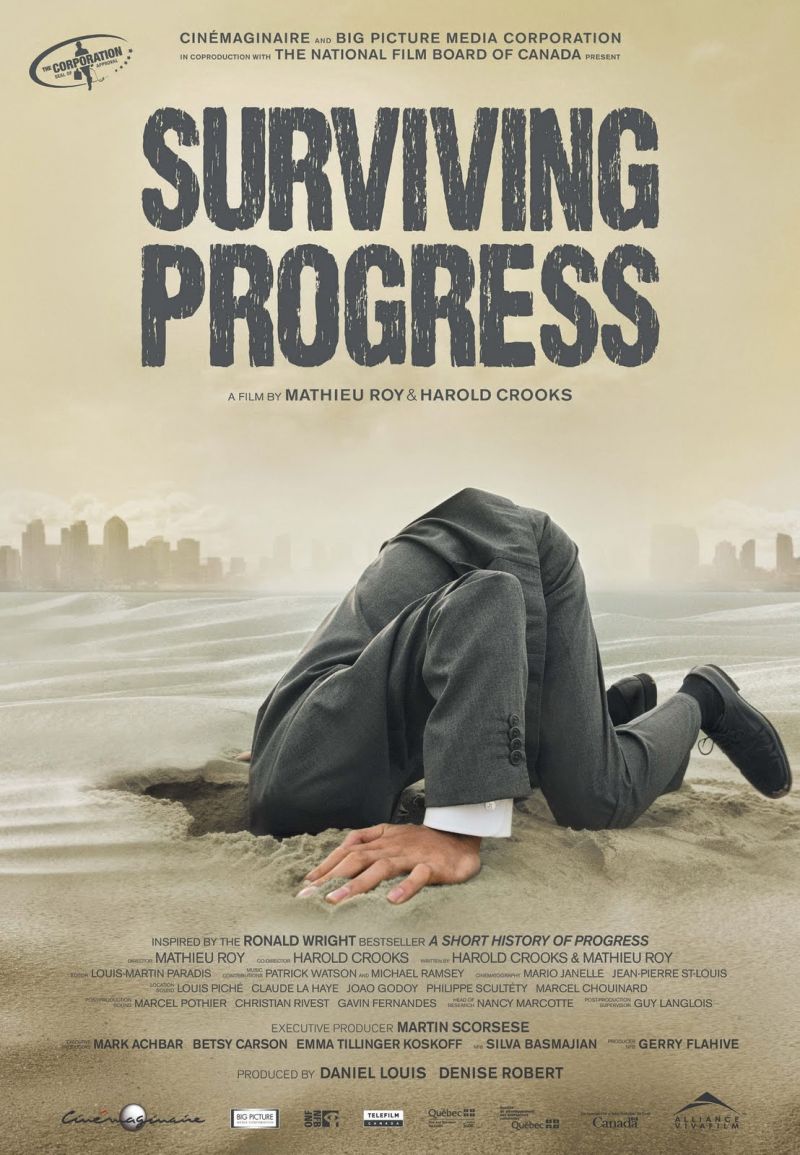
Surviving Progress (2011)
Genre: Documentary
Duration: 86 minuten
Country:
Canada
Directed by: Mathieu Roy and Harold Crooks
Stars: Stephen Hawking, Jane Goodall and David Suzuki
IMDb score:
 7,4 (1.979)
Releasedate: 4 November 2011







Surviving Progress plot
"Every time history repeats itself, the price goes up."
What is progress? Does progress necessarily mean improvement? Are our brains equipped to keep up with the rapid (technological) changes of the past centuries? Is it possible to keep growing at the same pace forever? Or will the magic words of the coming decades be austerity, shrinkage and consumption reduction? Scientists, philosophers and cultural critics examine these questions in a flowery docu-essay, based on the book A Short History of Progress (2004) by Canadian publicist Ronald Wright. Wright's central thesis is that we are in a so-called 'progress trap': technological innovations follow each other so quickly that our footprint threatens to become too large. The world population has also expanded considerably since the Second World War, and the global order that grew after the fall of communism has elevated economic growth to a mere ideology. According to Wright, who likens the catastrophe on Easter Island, this creates a cocktail that will poison us if we don't adjust our consumption habits. He is supported by environmental activist Margaret Atwood, primatologist Jane Goodall and biologist David Suzuki, who in webdoc The Test Tube already compared our Earth to a test tube that could fill up at any moment.
Actors and actresses






Corporate & Media
Realtimes Network
 Innovatieweg 20C
7007 CD, Doetinchem, Netherlands
+31(315)-764002
