• 177.886 movies
  • 12.199 shows
  • 33.965 seasons
  • 646.803 actors
  • 9.369.699 votes
Avatar
Profile
 
banner banner

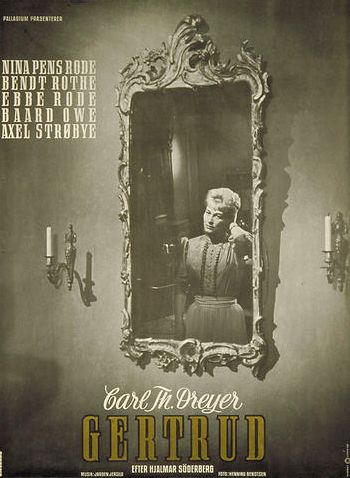
Gertrud (1964)

Drama | 119 minutes
3,36 63 votes

Genre: Drama

Duration: 119 minuten

Country: Denmark

Directed by: Carl Theodor Dreyer

Stars: Nina Pens Rode, Bendt Rothe and Ebbe Rode

IMDb score: 7,3 (7.281)

Releasedate: 19 December 1964

US
UK

This movie is not available on US streaming services.

JustWatch

Gertrud plot

In the elegant world of painters and musicians, Gertrud ends her marriage to Gustav and takes a new lover, the composer Erland. In the end, however, he too cannot charm her. Through flashbacks insight is given into the complex world of Gertrud and her ideal image of love.
logo tmdbimagelogo tmdbimagelogo tmdbimage
All Media

Trailer & other videos

Reviews & comments


avatar

Guest

  • messages
  • votes

Let op: In verband met copyright is het op MovieMeter.nl niet toegestaan om de inhoud van externe websites over te nemen, ook niet met bronvermelding. Je mag natuurlijk wel een link naar een externe pagina plaatsen, samen met je eigen beschrijving of eventueel de eerste alinea van de tekst. Je krijgt deze waarschuwing omdat het er op lijkt dat je een lange tekst hebt geplakt in je bericht.

* denotes required fields.

Pay attention! You cannot change your username afterwards.

* denotes required fields.
avatar van Spetie

Spetie

  • 38871 messages
  • 8142 votes

This is my third film by Dreyer, after Ordet and Jeanne d'Arc, but unfortunately this film is not as good as the other two.

For me that is mainly because Gertrud is an incredibly heavy film, perhaps a little too heavy. I knew in advance that it is a very heavy film and I always prepare myself for that, but even then it is a tough one. Not because the film is boring, but mainly because the dialogues are long and many, the film is mainly about that and it is certainly not a happy film.

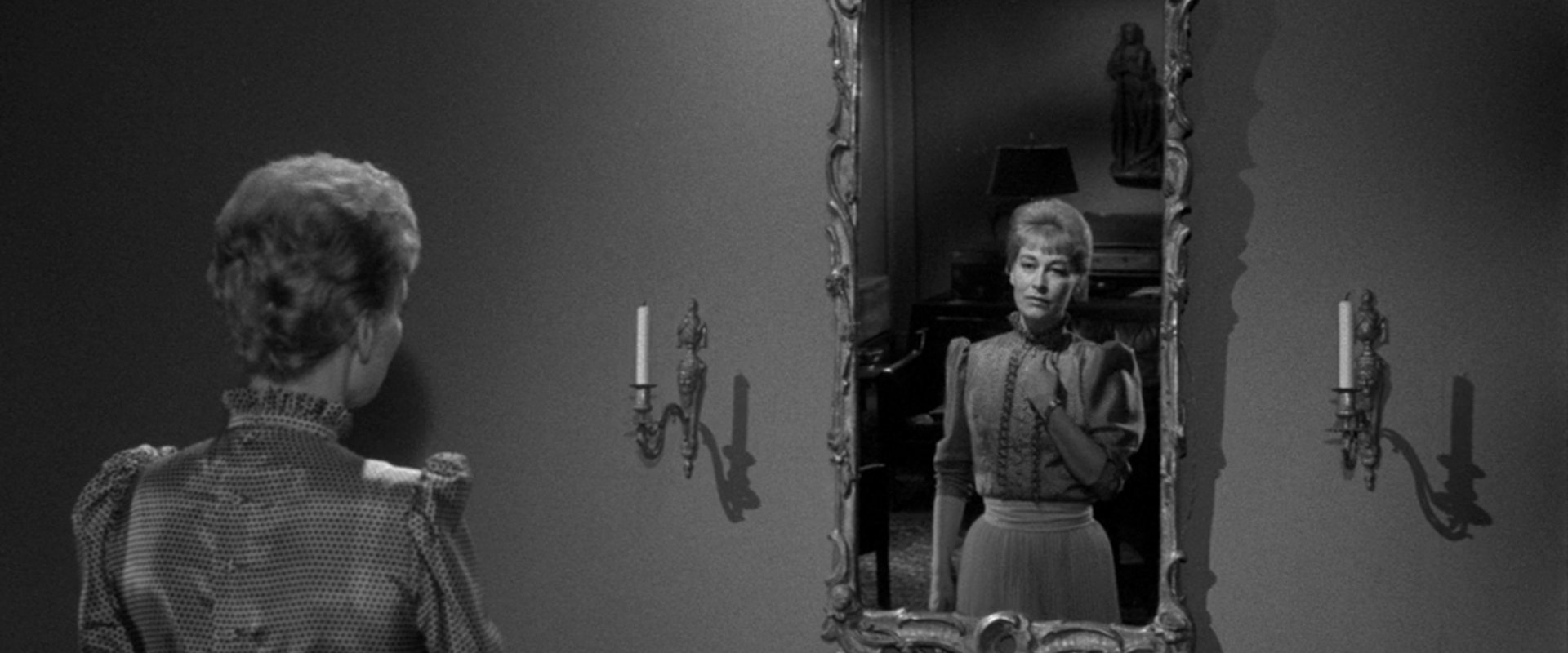
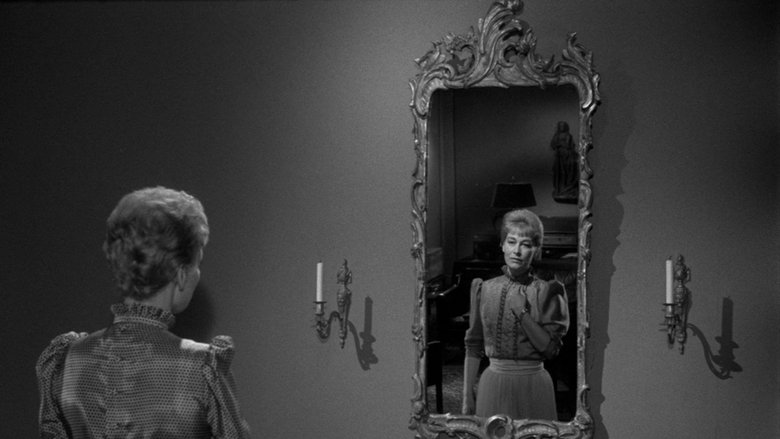
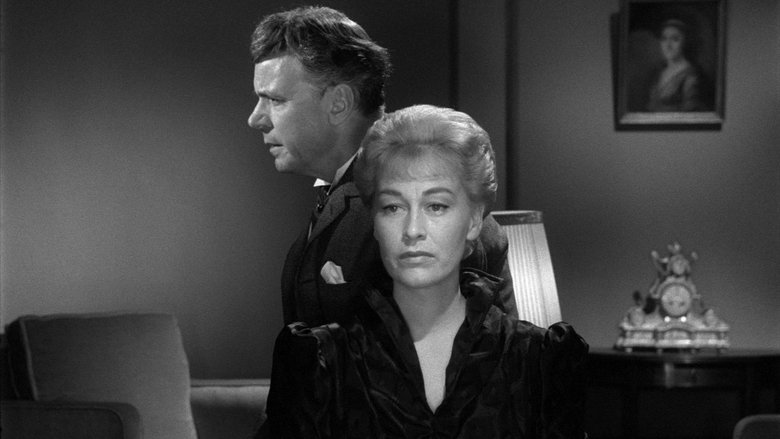
The cinematography of the film is, by the way; very good. Despite the fact that the film takes place in a room for the entire running time, Dreyer makes very good use of the black-and-white contrast and also knows how to make beautiful use of shadows by means of beautiful lighting. Furthermore, the takes and shots are often very long, which I also like about this film. The acting of the leading lady is good in itself, but I sometimes had trouble sympathizing with the character of Gertrud. At one point her search for perfect love even started to annoy me. The somewhat expressionless acting is part of that, of course, but that also made it difficult for me to feel sympathy for her. In the end I still felt that in the end, because then you see her as an old lady looking back on her life and she finally shows some emotion.

Nice film in the end, but too heavy and distant to be really good.

3.0*

dutch flagTranslated from Dutch · View original

avatar van NYSe

NYSe

  • 1749 messages
  • 1611 votes

I think Dreyer himself succeeds the most with La Passion de Jeanne d'Arc and Vampyr. Mainly because he shows how brilliantly he is at making atmospheric images speak: Jeanne d'Arc as a silent film contains only a handful of intertitles and Vampyr as a sound film contains just as little spoken dialogue.

With Vredens Dag he starts to work more with dialogue, but this is still sparing in terms of providing information: feelings and inner struggle must be read from the faces and deduced from the images.

That is why Ordet and especially Gertrud feel a bit forced: everything is spoken by the characters instead of the beautiful images speaking for themselves, so that they get snowed under by the theatrical texts. Gertrud also contains rather expressionless acting and a main character who rambles on about the same principles just a little too much without looking at her fellow actors. With two hours that might be just a bit too much.

dutch flagTranslated from Dutch · View original

avatar van starbright boy

starbright boy (moderator films)

  • 22396 messages
  • 5066 votes

While you can still recognize Dreyer's style, at least the style of the other late Dreyer Ordet, this one is a lot less hopeful. And he seems more bitter about existence. But the last scene that takes place decades later puts the film in a different, much more nuanced perspective.

Ordet's style goes a few steps further, the acting is even more formalistic. The shots are even longer and the setting is often very simple. The characters in the film move in a formal world and try to express their emotions in words, but that is an impossibility. Partly for this reason, Gertrud does not seem to find true love, but the almost hopeful thing about this film is that she is satisfied in the end that she has never settled for anything less. I'd rather have no love than lacked love. Dreyer's style makes the film a lot less accessible than the four other films I've seen by him, but connects wonderfully well with the content of the play (which had fascinated Dreyer for decades). This is a pretty radical film that was mostly negatively received at the time. Until other directors in particular turned out to admire this film.

It took me quite a while to get there, but I saw something very special. But there are quite a few people (sometimes also fans of Dreyer) who grit their teeth on this last film of his and I can understand that.

dutch flagTranslated from Dutch · View original